23 OCT 2025 - We are back! If you have been following us over the last few years, you will know that the last 2 months have been rough. We website was practically not loading. Sorry for the mess. We are back though and everything should run smoothly now. New servers. Updated domains. And new owners. We invite you all to start uploading torrents again!
TORRENT DETAILS
Tolkien, J R R - Complete Works, Incl The Lord Of The Rings (72 Books)
* J. R. R. Tolkien - Complete Works, incl. The Lord of the Rings (72 books)
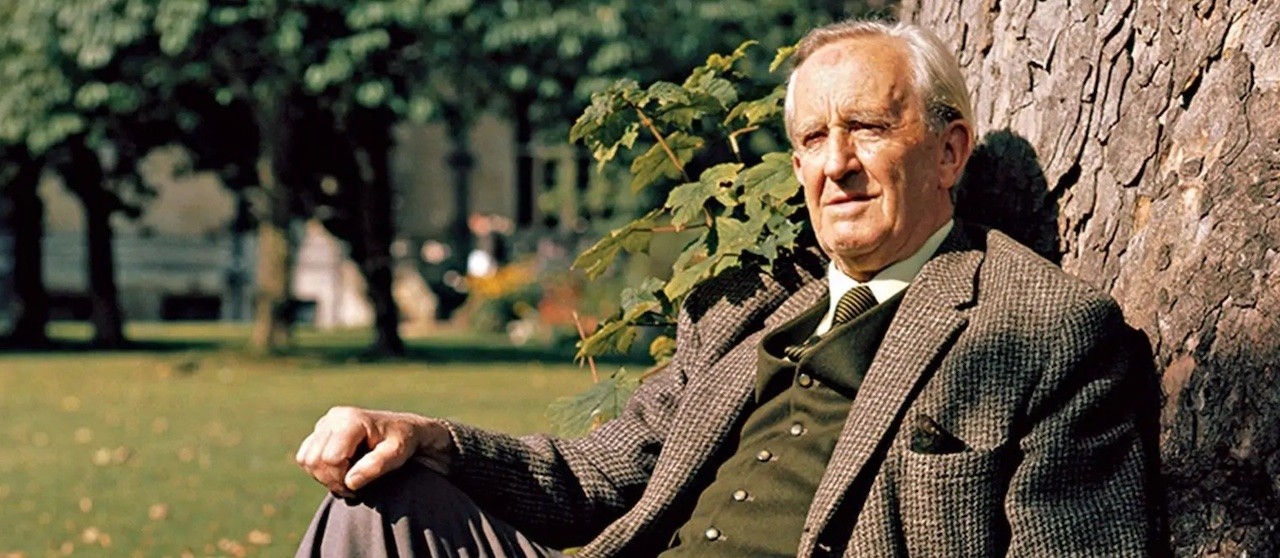
JOHN RONALD REUEL TOLKIEN (1892–1973) occupies a singular place in modern literary history as both a rigorous academic and a creator of one of the most fully realized imaginative worlds ever committed to print. Trained as a philologist and long associated with Oxford University, Tolkien specialized in Old and Middle English, Norse, and medieval literature. His scholarly work shaped not only his prose style but also his understanding of myth as a vital mode of meaning-making rather than a relic of premodern thought. For Tolkien, storytelling was inseparable from language, history, and moral vision.
Tolkien’s reputation rests chiefly on his Middle-earth narratives, beginning with THE HOBBIT (1937) and culminating in THE LORD OF THE RINGS (1954–55). The Hobbit, written initially for his children, combines the conventions of the fairy tale with a lightly ironic narrative voice, while introducing themes of courage, greed, and moral growth. The Lord of the Rings expands this modest beginning into a monumental epic, structured around the destruction of the One Ring and the struggle against tyranny. Drawing on Old English heroism, Norse fatalism, and Christian moral philosophy, the work explores power, sacrifice, and the endurance of goodness in a fallen world, achieving a tonal gravity rare in twentieth-century popular fiction.
The deeper mythological framework of Middle-earth is most fully revealed in the posthumously published THE SILMARILLION (1977). Here Tolkien presents a cosmogony and legendary history extending thousands of years before The Lord of the Rings, recounting the creation of the world, the rebellion of angelic beings, and the tragic cycles of pride and loss among Elves and Men. Written in a deliberately archaic and elevated style, The Silmarillion underscores Tolkien’s ambition to create a mythology for England—one grounded in linguistic invention, moral seriousness, and mythic resonance rather than in novelistic realism.
Alongside these Middle-earth texts, Tolkien produced a body of non–Middle-earth works that illuminate his range as a writer. FARMER GILES OF HAM (1949), SMITH OF WOOTTON MAJOR (1967), and LEAF BY NIGGLE (1945) are shorter, often allegorical narratives that blend humor, melancholy, and theological reflection. His seminal lecture “On Fairy-Stories” (1947) articulates a theory of fantasy as “sub-creation,” defending imaginative literature as a legitimate and even necessary human activity. These works reveal Tolkien’s capacity to explore his central concerns—creativity, humility, loss, and hope—within compressed and formally diverse modes.
Equally important to Tolkien’s legacy are the medieval texts he edited, translated, and interpreted, which helped shape modern understanding of early English literature. His edition of SIR GAWAIN AND THE GREEN KNIGHT (1925; 2nd edition, 1967), along with PEARL and SIR ORFEO (1975), remains influential for its philological precision and literary sensitivity. BEOWULF: A TRANSLATION AND COMMENTARY , published posthumously in 2014, reflects decades of engagement with the poem and reframes it as a work of profound artistic unity rather than a mere historical artifact. Through these scholarly labors, Tolkien not only preserved foundational texts but also modeled a way of reading them that bridges academic rigor and imaginative sympathy.
From early in his writing career, the development of his stories was accompanied by drawings and paintings, especially of landscapes, and by maps of the lands in which the tales were set. He produced pictures to accompany the stories told to his own children, and sent them elaborately illustrated letters purporting to come from Father Christmas. Much of this artwork was collected and published in 1995 as J.R.R. TOLKIEN: ARTIST AND ILLUSTRATOR , which discusses Tolkien's paintings, drawings, and sketches, and reproduces approximately 200 examples of his work.
The following books are in ePUB format unless otherwise noted:
* Ancrene Wisse: The English Text of the Ancrene Riwle (Oxford, 1962) – PDF
* Sir Gawain and the Green Knight [ed. Davis, 2e] (Oxford, 1967) – PDF
== TRANSLATOR ==
* Beowulf: Translation & Commentary [ed. C. Tolkien] (HarperCollins, 2014)
* Old English Exodus: Text, Translation & Commentary (Oxford, 1981) – PDF
* Sir Gawain and the Green Knight [ed. C. Tolkien] (HM, 1974) – PDF^
* Sir Gawain and the Green Knight [ed. C. Tolkien] (Mariner, 2021)
== ART ==
* Art of The Hobbit [Hammond & Scull] (HarperCollins, 2011) – PDF
* J.R.R. Tolkien: Artist & Illustrator [Hammond & Scull] (HM, 1995) – PDF
* Pictures by JRR Tolkien [ed. C. Tolkien] (Allen & Unwin, 1979) – ePUB / PDF
== COLLECTIONS ==
* Complete Works (Delphi Classics, 2024)
== CONSTRUCTED LANGUAGES ==
Among the many individual papers included in this collection are a large volume of Tolkien's writings on his constructed languages, primarily the Elvish languages such as Quenya and Sindarin, published and annotated by scholars in the journals "Vinyar Tengwar" and "Parma Eldalamberon". See file listing for individual articles compiled in Papers folder.
== BIBLIOGRAPHICAL & REFERENCE ==
* J.R.R. Tolkien: A Descriptive Bibliography [W. Hammond] (St. Paul's, 1993) – PDF