The Endless River is the fifteenth and final studio album by the British progressive rock band Pink Floyd. It was released by Parlophone and Columbia Records in Friday-release countries on 7 November 2014, and in the United Kingdom and United States on 10 November 2014. It is Pink Floyd's first studio album since the death of keyboardist and founder member Richard Wright, who appears posthumously, and the third by the David Gilmour-led Pink Floyd following Roger Waters' departure in 1985. It is also the first Pink Floyd album distributed by Parlophone and Warner Bros. Records following the purchase of EMI and its assets by the Universal Music Group in 2012, their transfer to Parlophone and the purchase of Parlophone by Warner Bros. in 2013.
Described as a "swan song" for Wright, The Endless River mostly comprises instrumental music. It is based on 20 hours of unreleased material Pink Floyd wrote, recorded and produced with Wright during sessions for their previous studio album The Division Bell (1994). New material was recorded in 2013 and 2014 in Gilmour's studios the Astoria and Medina Studios in Hove, England. It was produced by Gilmour, Youth, Andy Jackson and Phil Manzanera.

Information about the The Endless River was leaked via social media, after which Pink Floyd made a formal announcement. The band, Parlophone and Columbia Records (outside Europe) launched a promotional campaign with television advertisements and installations of the album artwork in cities around the world, including London, New York, Paris, Berlin and Milan. The cover concept is by Ahmed Emad Eldin with sleeve design by Stylorouge and creative direction by Aubrey Powell.
The Endless River became the most pre-ordered album of all time on Amazon UK, and debuted at number one in several countries. The vinyl edition was the fastest-selling UK vinyl release of 2014 and the fastest-selling since 1997. The album received mixed reviews.
Contents
1 Background
2 Composition
3 Recording
4 Packaging
4.1 "Deluxe" editions
5 Track listing
6 Personnel

Background
The Endless River was created as a tribute to Richard Wright, one of the band's founding members, who died in 2008.
After the departure of founding member Roger Waters in 1985 and Waters' failed attempt to dissolve the band,guitarist and vocalist David Gilmour was left to lead Pink Floyd with drummer Nick Mason. Keyboardist Richard Wright had been fired by Waters during the recording of The Wall (1979), but was invited back by Gilmour and Mason. Under Gilmour's leadership, Pink Floyd recorded two studio albums: A Momentary Lapse of Reason (1987) and The Division Bell (1994). The latter saw a greater participation from Richard Wright, who shared his first writing credits on a Pink Floyd album since Wish You Were Here (1975), and recorded his first lead vocal since The Dark Side of the Moon (1973).
Wright died of an undisclosed form of cancer on 15 September 2008 at the age of 65. Initial tributes to Wright included statements from Gilmour, Mason and Waters, tribute performances by artists such as Elton John and various television and radio specials produced in the weeks following his death.
Composition
The Endless River comprises mostly ambient and instrumental music. The closing track "Louder Than Words" is the album's only song to have a lead vocal track, with lyrics by David Gilmour's wife Polly Samson, who also shares writing credits on Pink Floyd's The Division Bell and Gilmour's On an Island.
Mason described the album as a tribute to Wright: "I think this record is a good way of recognising a lot of what he does and how his playing was at the heart of the Pink Floyd sound. Listening back to the sessions, it really brought home to me what a special player he was."Gilmour told Mojo: "Unapologetically, this is for the generation that wants to put its headphones on, lie in a beanbag, or whatever, and get off on a piece of music for an extended period of time. You could say it’s not for the iTunes, downloading-individual-tracks generation."
Recording
Drummer Nick Mason (left) and guitarist David Gilmour (right) took up the project in 2013, intending to create "a 21st-century Pink Floyd album".
The Endless River is based on material recorded in 1993 and 1994 during the Division Bell recording. The sessions were held at Britannia Row Studios and aboard the Astoria, where Pink Floyd's A Momentary Lapse of Reason (1987) and Gilmour's On an Island (2006) were also partly recorded. In 1994, Wright said the band had recorded "four 90-minute DATs of five or six hours of music. The hardest thing was to throw things out and decide what we're gonna work on ... but they are not lost. They are in my head, they are in Dave's head." In the same year, Pink Floyd engineer Andy Jackson edited the material, described by Mason as ambient music, to an hour-long composition tentatively titled The Big Spliff. Pink Floyd decided not to release it.
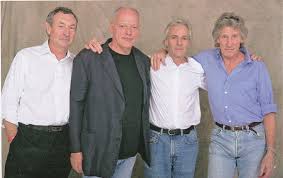
In 2012, Gilmour and Mason decided to revisit recordings made with Wright prior to his death in 2008 to create a new Pink Floyd album. Gilmour said: "We listened to over 20 hours of the three of us playing together and selected the music we wanted to work on for the new album. Over the last year we've added new parts, re-recorded others and generally harnessed studio technology to make a 21st-century Pink Floyd album. With Rick gone, and with him the chance of ever doing it again, it feels right that these revisited and reworked tracks should be made available as part of our repertoire." Only a small part from The Big Spliff was used.
Gilmour asked guitarist and producer Phil Manzanera, who played on and co-produced On an Island, to work on the material. Manzanera listened to 20 hours of recordings and, with Jackson and engineer Damon Iddins, spent six weeks assembling four 14-minute pieces. Gilmour gave the first two of these pieces to producer Youth, who added guitar and bass parts. In November 2013, Gilmour led sessions with Manzanera, Youth and Jackson to record material with Mason, saxophonist Gilad Atzmon and bassist Guy Pratt.[18] Backing vocalists including Durga McBroom recorded parts and Gilmour recorded lead vocals on "Louder than Words", with lyrics written by Gilmour's wife Polly Samson. The album comprises four pieces each taking a side of the record, with additional drum and guitar overdubs. Similar to how The Division Bell sampled a Stephen Hawking speech recorded for a British Telecom commercial in "Keep Talking", the track "Talkin' Hawkin'" contains a Hawking sample taken from the same advertisement. "Autumn '68" features a recording of Wright playing the Royal Albert Hall's pipe organ in 1969. The track also has additional keyboards, added more recently by Damon Iddins. Mason stated that unreleased sessions Wright recorded for Gilmour's solo projects could appear on Gilmour's future solo albums. The Endless River is the first Pink Floyd studio album since The Dark Side Of The Moon (1973) for which Mason receives writing credits (for "Sum" and "Skins").
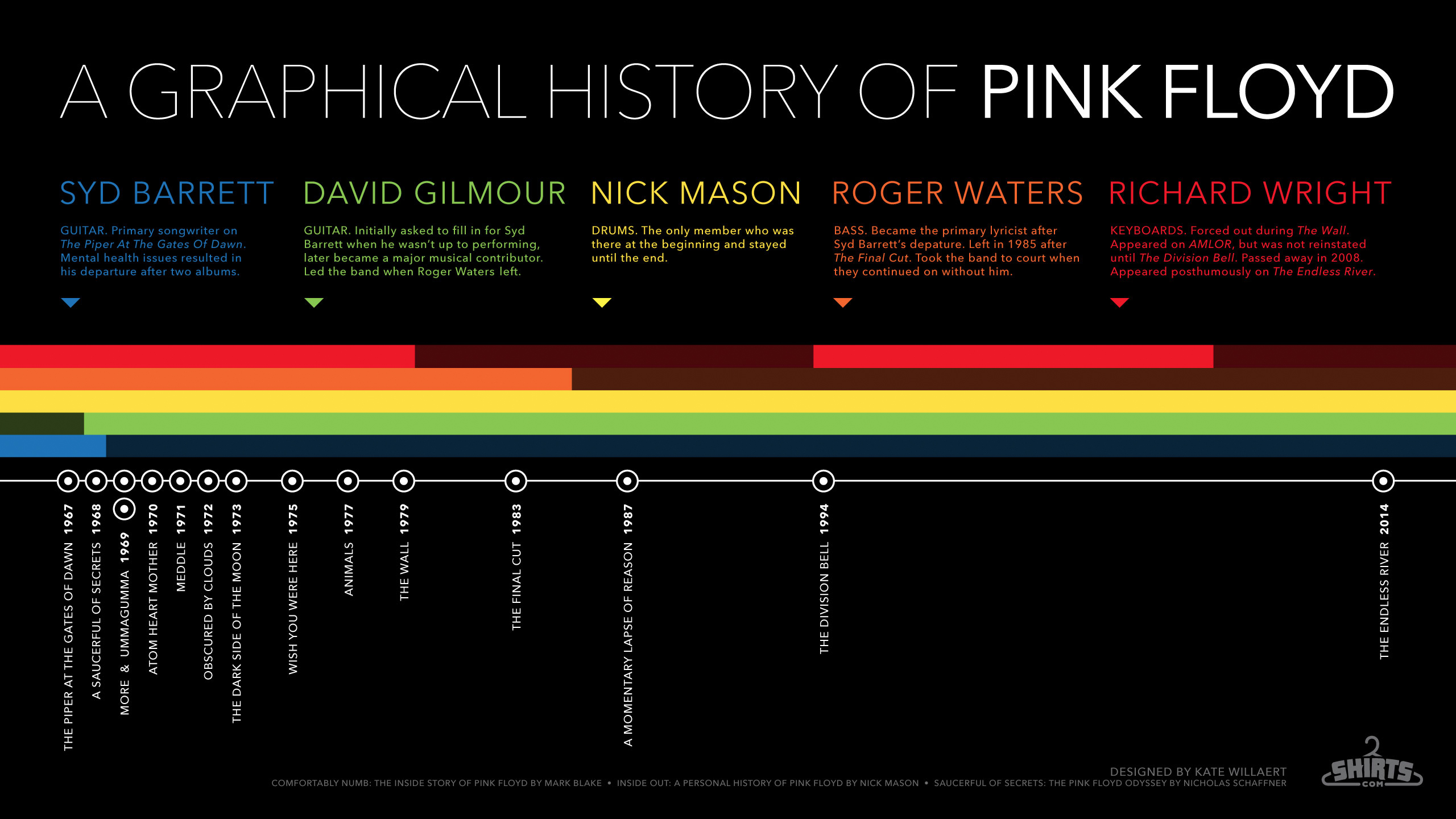
Bassist and songwriter Roger Waters, who left Pink Floyd in 1985, was not involved in the recording. Asked if The Endless River is the final Pink Floyd album, Gilmour replied: "Yes, I'm pretty certain that there will not be any sort of follow-up after this."
1. "Things Left Unsaid" David Gilmour, Richard Wright 4:26
2. "It's What We Do" Gilmour, Wright 6:17
3. "Ebb and Flow" Gilmour, Wright 1:55
4. "Sum" Gilmour, Nick Mason, Wright 4:48
5. "Skins" Gilmour, Mason, Wright 2:37
6. "Unsung" Wright 1:07
7. "Anisina" Gilmour 3:16
8. "The Lost Art of Conversation" Wright 1:42
9. "On Noodle Street" Gilmour, Wright 1:42
10. "Night Light" Gilmour, Wright 1:42
11. "Allons-y (1)" Gilmour 1:57
12. "Autumn '68" Wright 1:35
13. "Allons-y (2)" Gilmour 1:32
14. "Talkin' Hawkin'" Gilmour, Wright 3:29
15. "Calling" Gilmour, Anthony Moore 3:37
16. "Eyes to Pearls" Gilmour 1:51
17. "Surfacing" Gilmour 2:46
18. "Louder than Words" Gilmour, Polly Samson 6:36
The Endless River deluxe edition
No. Title Writer(s) Length
19. "TBS9" Gilmour, Wright 2:27
20. "TBS14" Gilmour, Wright 4:11
21. "Nervana" Gilmour 5:39
22. "Anisina" (video) Gilmour 2:49
23. "Untitled" (video) Wright 1:22
24. "Evrika (A)" (video) Wright 5:58
25. "Nervana" (video) Gilmour 5:32
26. "Allons-y" (video) Gilmour 6:00
27. "Evrika (B)" (video) Wright 5:33
Personnel
Pink Floyd
David Gilmour – guitars (all but 3), EBow guitar ), lead vocals ), backing vocals , keyboards , piano , EMS VCS 3 ), bass guitar , Hammond organ , percussion , voice samples
Nick Mason – drums percussion , rototoms, gong , voice samples
Richard Wright – Hammond organ , Farfisa organ , pipe organ , piano, Rhodes piano , electric piano, keyboards , synthesiser voice samples
Additional musicians
Guy Pratt – bass guitar
Bob Ezrin – bass guitar , additional keyboards
Andy Jackson - bass guitar effects
Jon Carin – synthesisers , percussion loop
Damon Iddins – additional keyboards
Anthony Moore – keyboards
Gilad Atzmon – tenor saxophone , clarinet
Escala:
Chantal Leverton – viola
Victoria Lyon – violin
Helen Nash – cello
Honor Watson – violin
Durga McBroom – backing vocals
Louise Marshal – backing vocals
Sarah Brown – backing vocals
Stephen Hawking – voice sample
Youth, Eddie Bander and Michael Rendall – additional programming, engineering, sound design, assorted synthesizers and keyboards
Production
David Gilmour – producer
Phil Manzanera – co-producer
Youth – co-producer
Andy Jackson – engineer, co-producer, mixing, mastering of bonus content on DVD and Blu-ray
Bob Ezrin – co-producer 1993 sessions
Damon Iddins – engineer
Doug Sax - mastering for the vinyl issue
Artwork
Aubrey Powell – creative director
Stylorouge – sleeve design
Ahmed Emad Eldin – album cover concept


